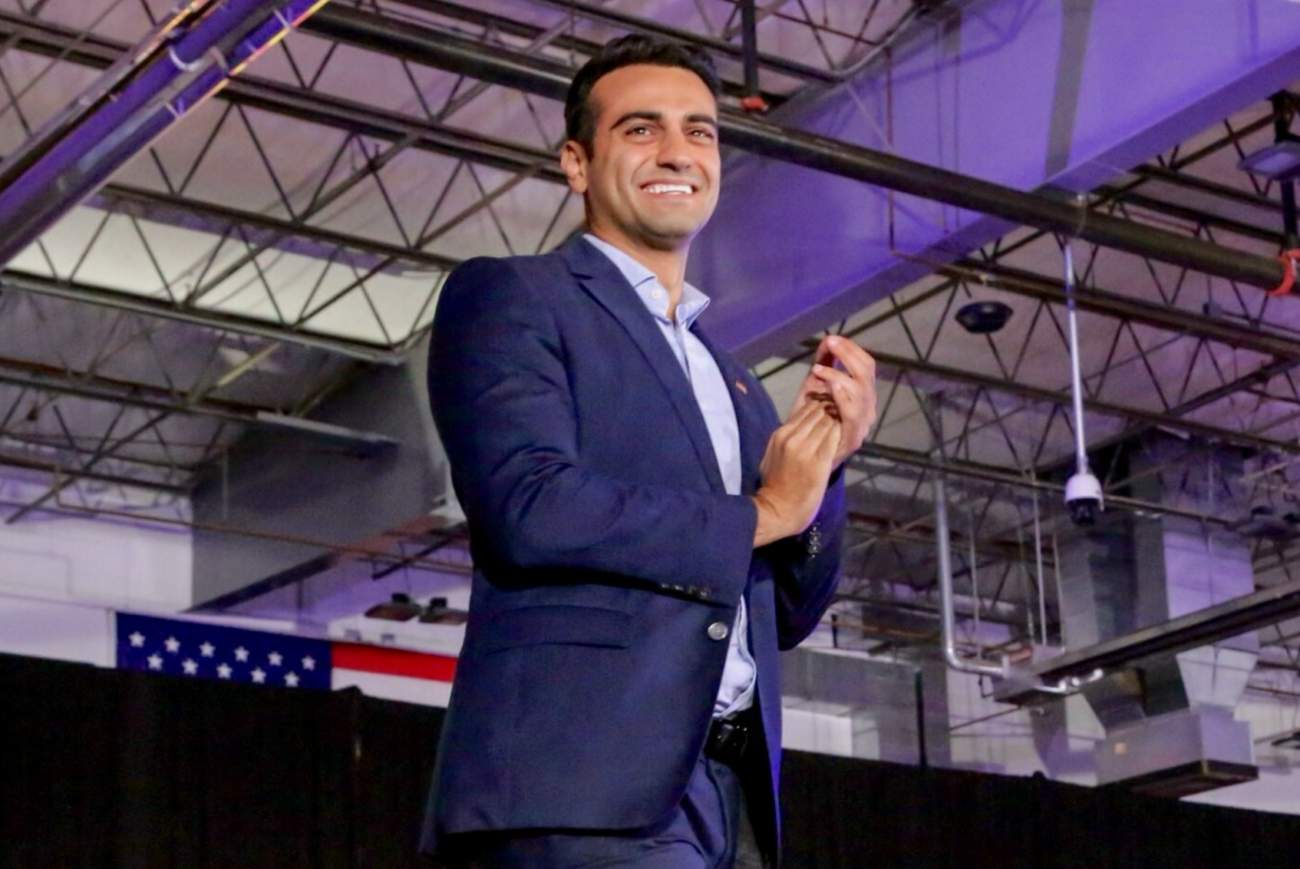


Representative Abe Hamadeh (R-AZ) applauded the Trump Administration's recent announcement that the United States would shift its relationship with Israel to a more trade-focused approach rather than an aid-focused one.
The Context
On Tuesday, President Donald Trump announced that the United States would no longer contribute nearly $4 billion in military aid to Israel by the end of the year, which Prime Minister Benjamin Netanyahu confirmed was already in the works.
"They're fine with it because they've become a very successful country," President Trump stated. "They don't need it. And we won't be paying anymore... we won't be paying Israel. We'll help Israel if they need it. They've been a great ally."
What Hamadeh is Saying
"President Trump is right: the future of our relationship with Israel has to be trade, not aid," Rep. Hamadeh said in a press release, adding, "That's the message I and my colleague Congressman Marlin Stutzman (R-IN) delivered to Prime Minister Netanyahu in Jerusalem earlier this year, when they laid out the case for ending the $3.8 billion in annual military aid, so Israel buys American weapons and defense technology with its own money."
Rep. Hamadeh further emphasized that "America First has never meant America alone. It means strong partners, not permanent dependents. Peace through strength. Commerce, not blank checks. That's how we put the American people first."
Hamadeh on Israel
The Arizona congressman previously called for the reorganization of the Abraham Accords into an "Abraham Alliance" in a May op-ed for the Jerusalem Post, which he described as "a permanent strategic coalition between America, Israel, and Gulf partners like Saudi Arabia, the UAE [United Arab Emirates], Qatar, and Bahrain. Not simply diplomatic ties, but integrated economic, technological, intelligence, military, cybersecurity, energy, and infrastructure cooperation designed to shape the 21st century."
He points out that Israel and other Gulf states are or are becoming technological powerhouses, and the United States remains the only country powerful enough to provide the bedrock for this new geopolitical relationship.