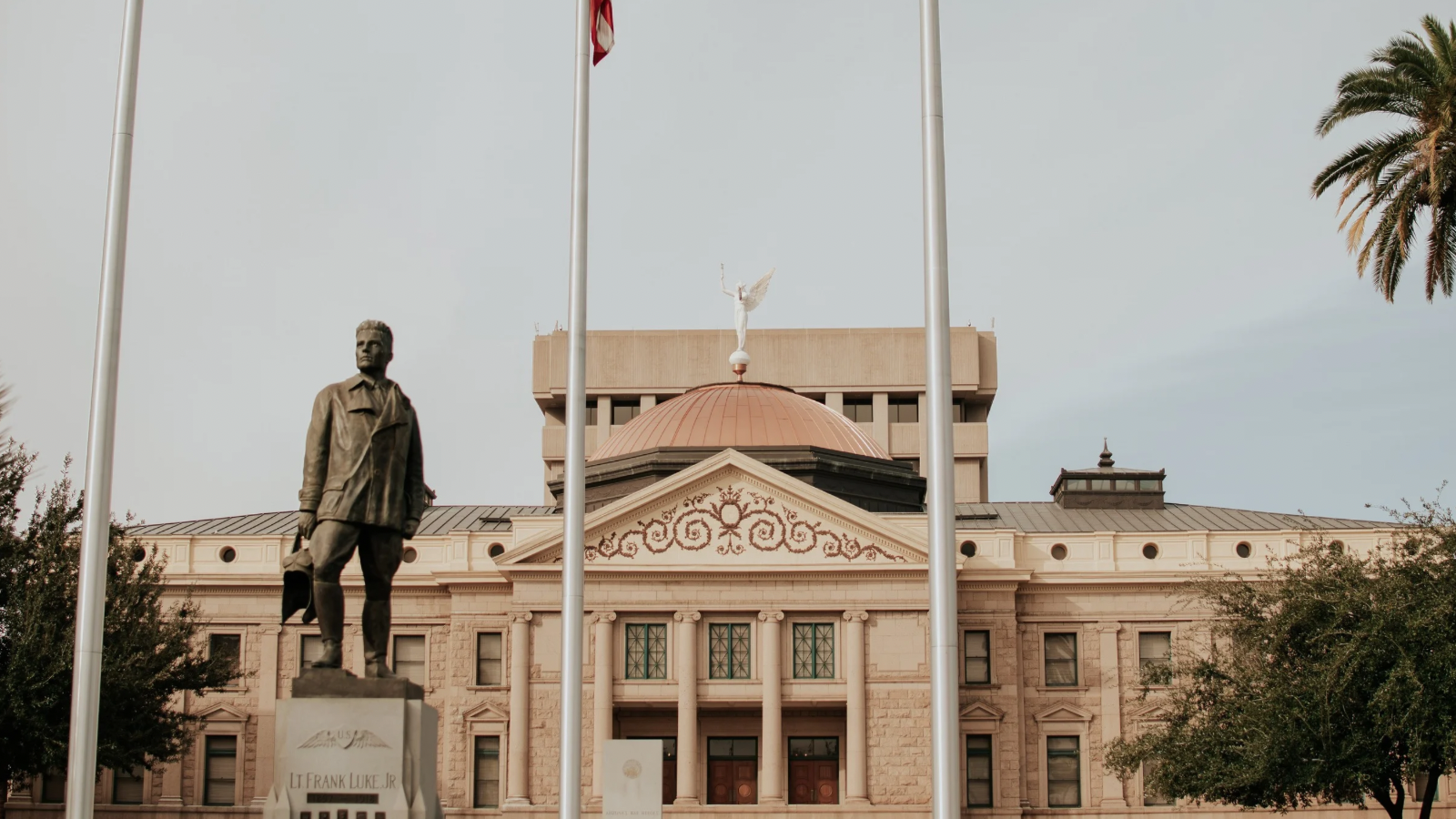
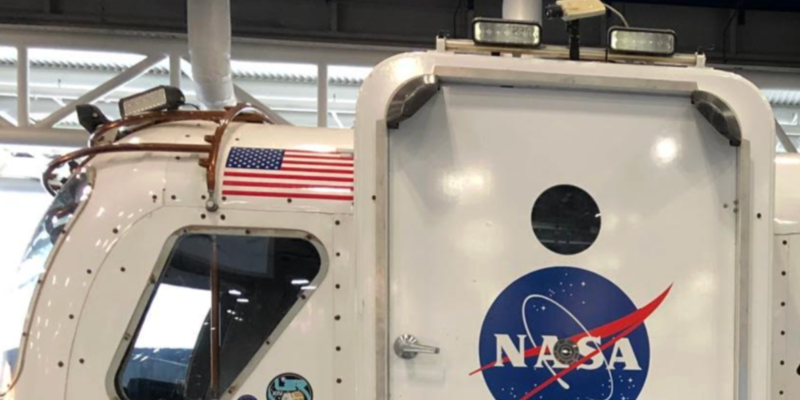

A Flagstaff startup is making history in space, and Congressman Eli Crane (R-AZ) is taking notice.
On July 3, a robotic spacecraft called LINK successfully launched into orbit aboard the final flight of Northrop Grumman's Pegasus XL rocket, kicking off one of the most ambitious satellite rescue missions ever attempted.
The spacecraft was built by Katalyst Space Technologies, a small startup based in Flagstaff, Arizona, that was given less than a year to design, build, test, and launch a mission to save one of NASA's most valuable space telescopes from burning up in Earth's atmosphere.
Crane responded to the news simply but enthusiastically. "Great to see a Flagstaff company leading on this effort," he wrote.
The telescope in need of saving is NASA's Neil Gehrels Swift Observatory, a $500 million spacecraft launched in 2004 to study gamma-ray bursts and other high-energy events across the universe.
Problems and Solutions
After more than two decades of operation, Swift is still producing valuable science, but its orbit has been steadily decaying, accelerated by recent solar activity that increased atmospheric drag at its altitude. However, the problem is that Swift was never designed to be serviced or equipped with thrusters to correct its own orbit, leaving it on a path toward eventual destruction.
The spacecraft will spend the coming weeks observing Swift from a distance before carefully moving in to capture it. Once secured, LINK will fire gentle ion thrusters to slowly push both spacecraft to a safer, higher orbit, a process expected to take several months.
If successful, LINK will become the first private spacecraft ever to capture an uncrewed U.S. government satellite. The entire mission, from contract award to launch, cost NASA just $30 million, a fraction of what it would cost to replace Swift's capabilities.
NASA selected Katalyst for the job in September 2025, giving the young company's engineers a remarkably tight window to pull it off.
With LINK now in orbit and initial systems checks underway, the next chapter of Swift's scientific life may just be beginning.