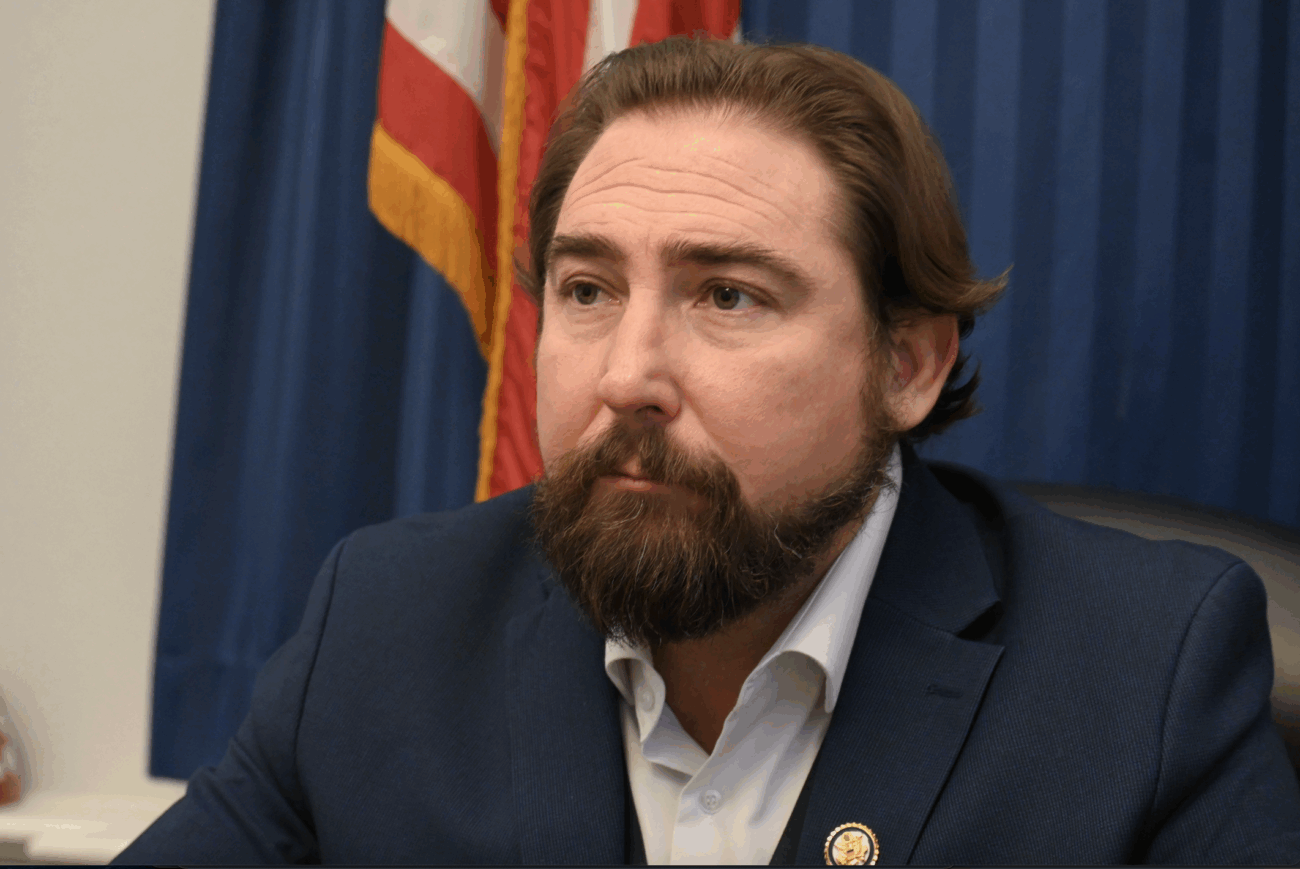

While Washington argues about what's happening at the border, Representative Eli Crane (R-AZ) is focused on what's happening beneath it in his longstanding fight.
Rep. Crane, who sits on the House Homeland Security Committee and has received classified briefings on cartel tunnel networks, introduced the Subterranean Border Defense Act earlier this year alongside Representative Lou Correa (D-CA).
The bill would require Customs and Border Protection to submit annual reports to Congress on how the agency is countering illegal underground tunnels, the same tunnels cartels use to move fentanyl and people into the United States.
"Cartels aren't going to throw their hands up and stop their multi-million-dollar business," Crane has said in an exclusive interview with Cactus Politics. "They're going to find other ways around, and one of the best ways is to use tunnels."
However, after the act's passing in the House, it has yet to be voted on in the Senate. "Like most things, it’s collecting dust in the Senate," he continued.
Newly Discovered Underground Tunnel
This comes amid Mexican authorities recently discovering a cross-border tunnel in Tijuana's Nueva Tijuana neighborhood that likely connects to a well-known street in San Diego.
Nearly 900 feet long and reaching roughly 21 feet underground, the tunnel was equipped with lighting, ventilation, and an electronic sliding mechanism allowing movement in both directions across the border.
Investigators executing a search warrant at a home above the tunnel found ammunition, suspected methamphetamine, marijuana, cellphones, and documents.
The property appeared to function as a storage and logistics hub for trafficking operations. Mexico's Federal Attorney General's Office said the discovery was a significant blow to cartel transportation routes and logistics networks.
Crane added: "We have to do more to counter the tunnel threat at our border."
As of now, the Department of Homeland Security has been contacted regarding the find.
It's the kind of operation Crane says Congress needs better visibility into. His bill makes tunnel reporting an annual rather than a one-time requirement, giving lawmakers a continuous view of how underground networks are evolving rather than relying on a single outdated snapshot.