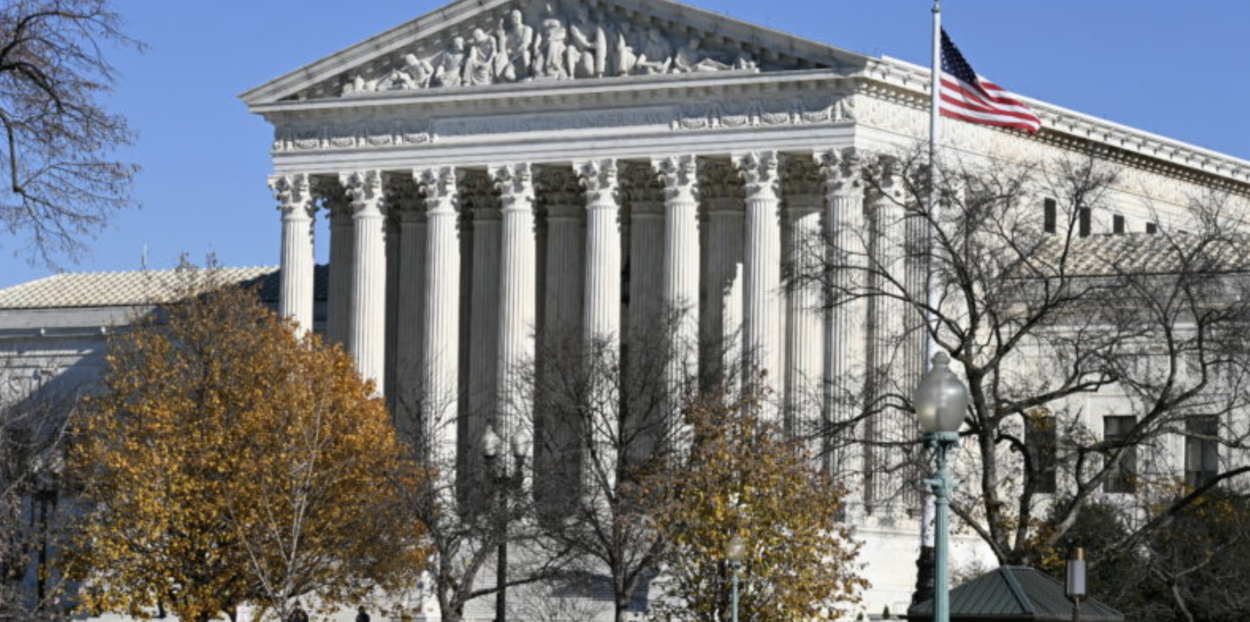

The U.S. Supreme Court quietly stepped back from a pivotal voting rights dispute Monday, allowing a lower court decision to stand that strips away a key legal tool used to protect minority voters, a move with significant implications for states like Arizona, where elections have long been contested terrain.
The justices declined to review a ruling from the 8th U.S. Circuit Court of Appeals, which determined that private citizens and advocacy organizations cannot file lawsuits to enforce Section 208 of the Voting Rights Act.
That section guarantees voters with disabilities or limited literacy the ability to bring a person of their choosing into the polling booth to assist them.
While Arizona falls outside the 8th Circuit's jurisdiction, legal experts say the decision signals a broader unraveling of the private enforcement mechanisms that have historically allowed community groups, not just the federal government, to challenge discriminatory voting practices.
Arizona, with its large Latino and Indigenous populations, has relied heavily on exactly those kinds of privately filed lawsuits to protect voter access over the decades.
Background on Case
KJZZ reported the case originated with Arkansas United, an immigrant advocacy group that had provided Spanish-language interpreters at polling locations.
The group challenged an Arkansas law barring non-poll workers from assisting more than six voters. A federal judge initially sided with the group in 2022, but an appeals panel reversed that decision last year, ruling that private groups lack legal standing to bring such claims under the Voting Rights Act.
Monday's Supreme Court action comes roughly two months after the court's conservative majority issued another ruling weakening Voting Rights Act redistricting protections, decisions that together are reshaping the legal landscape for voting access nationwide.
Critics argue that concentrating enforcement power solely within the Justice Department – an office subject to shifting political priorities – will dramatically reduce accountability.
With limited federal resources, many violations could go unchallenged.
For Arizona voters who depend on language assistance or disability accommodations at the polls, the cumulative effect of these rulings remains a watchful concern heading into future election cycles.