
House Majority Whip Julie Willoughby (R-AZ) says months of behind-the-scenes work with air quality regulators has produced findings that could free millions of drivers from paying a premium at the pump every summer, and she's calling on Governor Katie Hobbs (D-AZ) to act.
Rep. Willoughby has spent the better part of 2026 pushing for a change to the boutique gasoline blend required in Maricopa and Pinal counties during the summer months.
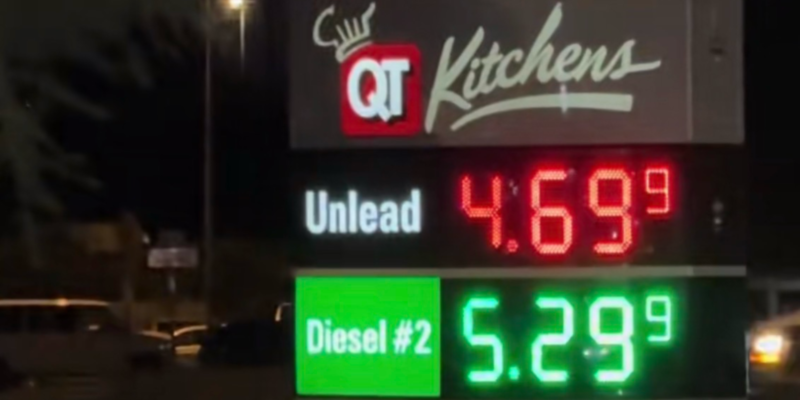
The specialty fuel, designed to meet federal air quality standards in the Phoenix metro area, costs more to produce and comes from a shrinking number of California refineries, a combination that drives up prices for Arizona families each year.
The centerpiece of her effort is a request she made in February to the Maricopa Association of Governments (MAG) to model what would happen to air quality if Arizona swapped its current blend, which carries a Reid Vapor Pressure of 7.0 pounds per square inch, for a more widely available option rated at 7.4.
The results, delivered in March, showed that the change would raise peak ozone concentrations by between 0 and 0.01 parts per billion, depending on the modeling method used.
Willoughby called that a negligible difference and said the findings are now in the hands of the Hobbs administration, since MAG shared the data with the Arizona Department of Environmental Quality.
Fight to Begin Process
She further argued the governor has everything she needs to begin the process of requesting a federal plan revision.
Adding momentum to her push, the Trump administration recently issued a ruling acknowledging that a significant portion of the air pollution affecting Arizona originates outside the country, from international emissions sources beyond the state's control.
Willoughby said that recognition would give Arizona more room to argue that its current fuel requirements are stricter than necessary.
To address the issue from multiple angles, she introduced a package of bills that targets both short-term relief and long-term reform.
“Industry is cleaner today than it was when Arizona’s blend was last updated, and fuel standards nationwide have changed significantly since then,” Willoughby emphasized. “There is a strong possibility Arizona can move to a lower-cost fuel option without sacrificing air quality. If the evidence supports that conclusion, we should act immediately.”
Among them is a proposal to temporarily suspend Arizona's 18-cent gas tax on summer fuel in the affected counties, as well as measures requiring state agencies to regularly evaluate lower-cost fuel alternatives and mandating a blend switch once federal approval is secured.
Willoughby acknowledged that changing the blend requires EPA approval and a formal revision to the state's air quality plan, a process she says the governor could begin immediately.