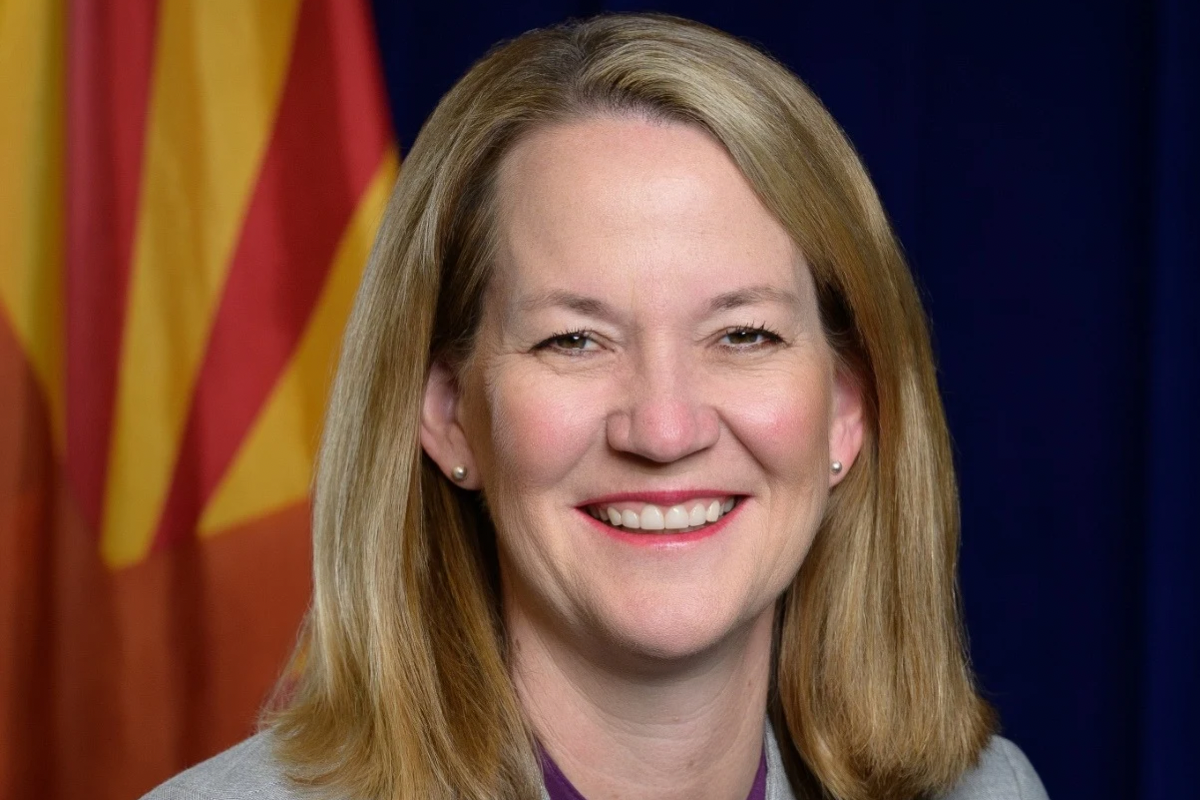

Attorney General Kris Mayes (D-AZ) doesn't slow down. The Arizona Attorney General has now filed her 42nd lawsuit against the Trump administration, taking direct aim at new federal student loan restrictions she says will gut Arizona's already fragile healthcare workforce.
This week, she joined a coalition of 26 states and jurisdictions in suing the U.S. Department of Education over a recently finalized rule that narrows the definition of what qualifies as a "professional degree" for federal borrowing purposes.
For an attorney general who has made challenging Washington a defining feature of her tenure, the lawsuit carries familiar urgency, but the consequences she's warning about are anything but routine.
"Arizona is already facing a serious healthcare workforce shortage, particularly in rural communities," Mayes said. "This unlawful rule would make that crisis worse by putting professional degree programs out of financial reach for Arizona students who are working hard to fill those gaps."
Annual Borrowing Limits
The rule flows from the One Big Beautiful Bill that Congress passed in July 2025, which introduced new annual borrowing limits for graduate and professional students, capping graduate borrowers at $20,500 per year and professional students at $50,000.
As those two categories carry very different loan ceilings, the legal definition of "professional degree" suddenly matters enormously for students pursuing advanced training in fields like medicine, healthcare, and law.
That definition, the coalition argues, is exactly where the Department of Education overstepped. While Congress incorporated an existing federal standard into the law, the lawsuit alleges the agency quietly added its own requirements, narrowing eligibility in ways lawmakers never authorized.
The Complaint
The complaint argues the rule "unlawfully adds criteria" to what was intended to be a clear and straightforward statutory definition.
The lawsuit also challenges protections meant to shield students already enrolled in affected programs.
KTAR reported that a grandfathering provision in the law was designed to delay the new caps for current students, but the coalition contends the rule undermines that safeguard, leaving students who transfer institutions or take a temporary leave potentially exposed to harsher financial limits upon their return.
The case has been filed in the U.S. District Court for the District of Maryland, co-led by the attorneys general of Colorado, Maryland, Nevada, and New York.