
With two of the West's most critical reservoirs sitting at a fraction of their capacity, Arizona's top Republican lawmakers traveled to Washington this week to urge the Trump administration to take urgent action on the Colorado River.
House Speaker Steve Montenegro and Senate President Warren Petersen led the delegation, which also included Senate President Pro Tempore T.J. Shope, Senator Tim Dunn, and Representative Gail Griffin.
They sat down with Interior Department Assistant Secretary Andrea Travnicek and Bureau of Reclamation Acting Commissioner Scott Cameron to lay out a series of proposals they say could stabilize the entire river system before it reaches a crisis point.
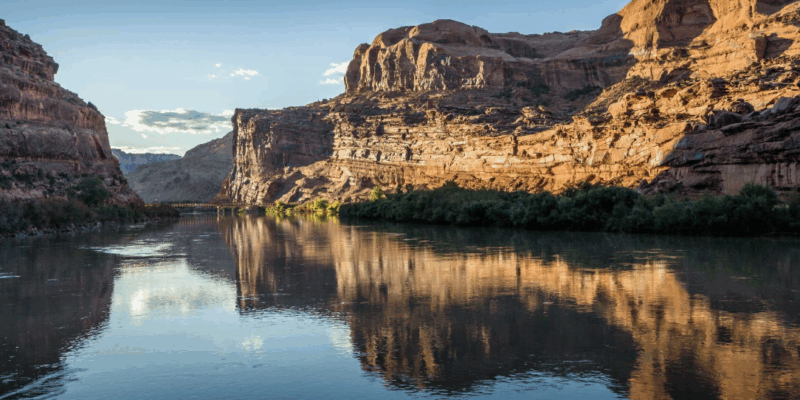
The core concern driving the meeting: Lake Mead and Lake Powell are between 25% and 33% full, while reservoirs in the Upper Basin states, including Colorado, Utah, Wyoming, and New Mexico, sit between 82% and 97% capacity.
“The seven basin states are facing a real crisis, and it’s going to take bold action to fix it,” said President Petersen.
Republican's Urge Protections
Now, Republican leaders want the federal government to invoke the Colorado River Storage Project Act of 1956 to push that upstream water downstream, protecting both hydropower output and long-term water availability.
"The water sitting upstream must be released so it can flow downstream to Lake Powell," Speaker Montenegro said.
Beyond that immediate ask, the group outlined a broader plan. At its center is a proposal for $1 billion in annual federal funding to compensate water users across all seven basin states, plus Mexico, who voluntarily reduce their consumption.
The program would operate as a reverse auction, awarding funds to the bidder offering the greatest water savings per dollar rather than paying a flat rate per acre-foot.
Sen. Dunn described it as a way to maximize conservation without upending existing water rights, a politically sensitive issue across the region.
Long-term, the delegation pushed for federal investment in major infrastructure, including new storage facilities, water recycling technology, recharge basins, and large-scale desalination projects. Griffin referenced a potentially large new dam as part of that vision.
Lawmakers also urged the administration to tap existing emergency declarations, including a national energy emergency signed in January 2025, to fast-track resources toward the river's growing challenges.
"The Trump administration is the most qualified and competent partner to get this done, unlike any prior administration, and we’re confident that together we can save the Colorado River system," Petersen concluded.