
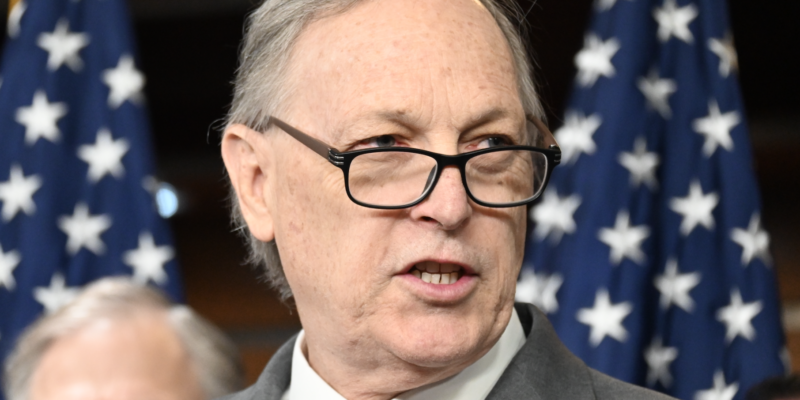

Representative Andy Biggs (R-AZ) is backing Kayleigh’s Law, a bill that would give victims of violent crimes and sex offenses permanent protection from their abusers.
This week, Rep. Biggs took to the House Judiciary Committee's crime subcommittee to champion legislation he says would close one of the most glaring gaps in federal law, such as the fact that victims of violent crime have no guaranteed right to permanent protection from their abusers.
Kayleigh's Law, introduced by Representative Abe Hamadeh (R-AZ), would require federal courts to issue lifetime no-contact injunctions against anyone convicted of federal sex crimes or violent felonies.
Fixing Current Law
Under current law, protection orders can expire or be terminated, meaning survivors are sometimes forced to return to court again and again just to stay safe, or worse, wait until their abuser makes contact before they can seek relief.
Biggs made clear he finds that unacceptable.
"Victims should not have to return to court repeatedly to extend the order or be forced to wait until their offender tries to contact them in order to petition the court for lifetime protection," he told the subcommittee. "That is shameful."
The story behind the new law is that Kayleigh Kozak, an Arizona woman sexually abused as a child by her teacher and coach, sought a protective order after learning her abuser was trying to terminate his probation, only to be denied when the court used a recent encounter between them against her.
Biggs called her journey from victim to advocate a model of what this legislation aims to achieve.
However, the issue goes beyond one survivor's story. He argued that a system that requires victims to repeatedly prove they still need protection prioritizes process over people.
Beyond Arizona, the bill’s significance already has state-level precedent in Wisconsin and Tennessee.
"Healing is not linear," Biggs concluded. "Safety should not have an expiration date."