
The Supreme Court ruled against President Donald Trump's trade policy on Friday, February 20, 2026, ruling 6-3 that his sweeping tariffs were illegal.
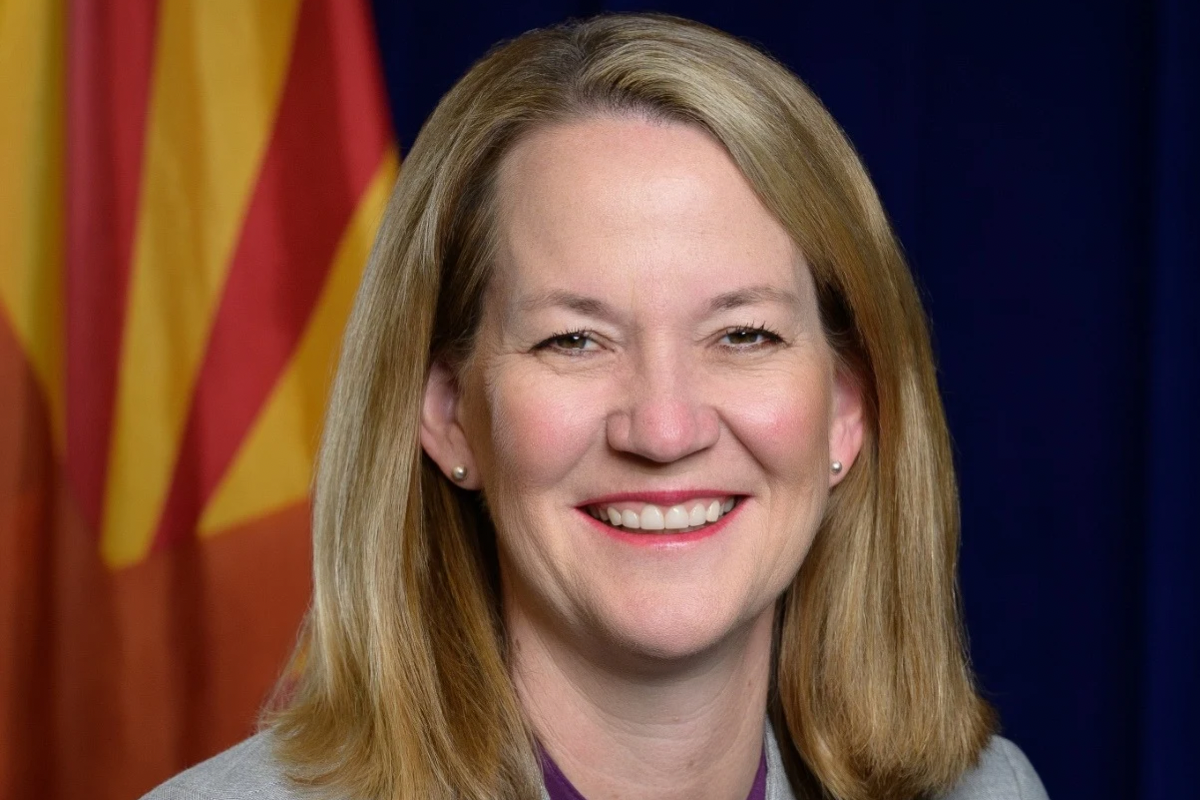
For Attorney General Kris Mayes (D-AZ), who helped lead the legal fight from the very beginning, it was the biggest victory yet in her ongoing battle against the Trump administration.
Mayes co-led the lawsuit back in April 2025 alongside Oregon Attorney General Dan Rayfield (D-OR), building a coalition of 13 attorneys general who argued Trump had gone too far.
When the lawsuit was first filed in the U.S. Court of International Trade, the tariffs in question were steep: 145% on most goods from China, 25% on products from Canada and Mexico, and 10% on goods from most other countries worldwide.
President Trump justified it all under a 1977 law called the International Emergency Economic Powers Act (IEEPA), a law designed for national emergencies that no president had ever used to impose tariffs.
The Supreme Court agreed it was a stretch, ruling that "IEEPA does not authorize the President to impose tariffs." Under the Constitution, only Congress holds the power to impose taxes and tariffs, not the White House.
Mayes' Win
After the ruling, Mayes issued a statement, declaring, "Let's be honest about what these tariffs actually were — an illegal tax on American families and businesses. " "And the President cannot impose taxes on the American people without the consent of their elected representatives in Congress,” she added.
According to the nonpartisan Tax Foundation, Trump's tariffs cost the average American household $1,000 in 2025 alone, the highest tariff burden since 1947.
Some tariffs do remain under separate legal authority, and the average household is still expected to face around $400 in additional costs in 2026.
Yet for Mayes, the ruling, her most high-profile win out of 35 cases filed against the Trump administration, represented something larger than economics. "The rule of law is worth fighting for," she said. "Today, we won one of those fights."
Trump's Fight
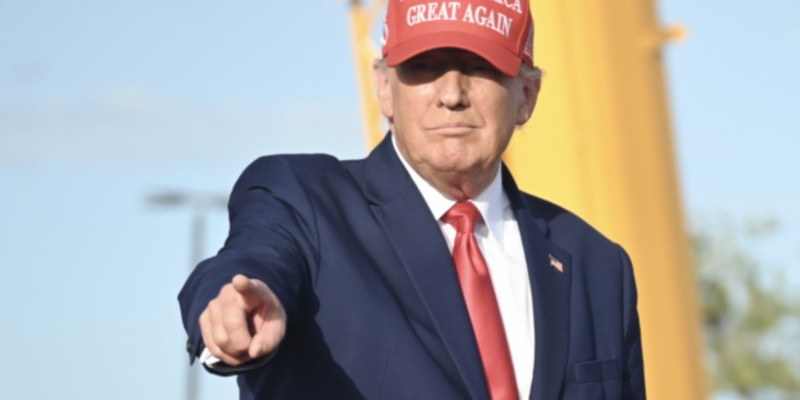
The legal victory may be short-lived, however. Trump moved quickly to respond to the ruling, initially announcing a 10% tariff on all imported goods as a replacement.
By Saturday, he had already raised that number, posting on Truth Social that tariffs would be bumped up to 15%, the maximum permitted under a separate, rarely invoked trade law.
Issuing the raise, he explained that this is “[based] on a thorough, detailed, and complete review of the ridiculous, poorly written, and extraordinarily anti-American decision on Tariffs.”
That law gives the administration roughly five months to keep the new tariffs in place before needing congressional approval, setting up yet another potential legal and political showdown over the president's trade authority.