
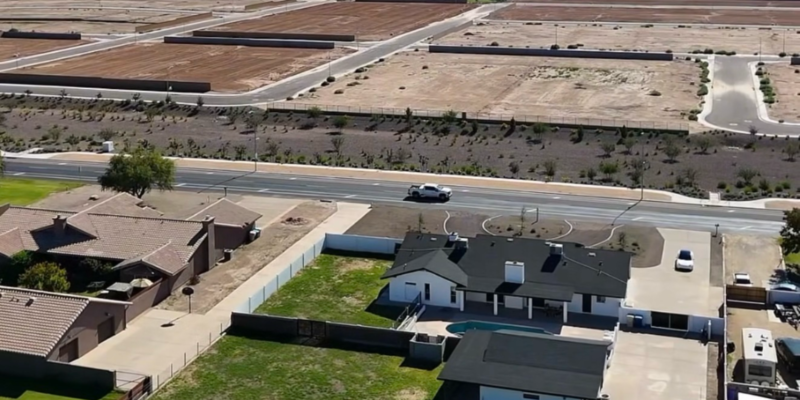

An Arizona court has struck down a state water policy that limited new housing development in parts of Maricopa County, marking a significant decision in an ongoing debate over growth and water use.
In a ruling issued Tuesday, a Maricopa County judge found that the Arizona Department of Water Resources (ADWR) “did not comply” with state law when it implemented what is known as the “Unmet Demand Rule.” The court then declared the policy invalid.
The rule, introduced in 2024, changed how homebuilders demonstrate long-term water availability. Previously, developers were required to show a 100-year groundwater supply for the specific site of a proposed project.
Under the new policy, builders had to prove that sufficient groundwater was available across the entire regional water management area.
State officials said the change was intended to address concerns about groundwater supply amid Arizona's rapid population growth. However, critics argued that the rule made it more difficult to build new homes in an already-tight housing market.
Previous Lawsuit
The Goldwater Institute, representing the Home Builders Association of Central Arizona, filed a lawsuit in January 2025 challenging the policy. The group argued that the department overstepped its authority and failed to follow the required rulemaking process, which includes public input.
“We're delighted that the court has struck down the bureaucracy's newfangled restriction on home construction,” said Timothy Sandefur, vice president for legal affairs at the Goldwater Institute.
He added that the ruling reinforces that state agencies “must obey the law, not rewrite it” when creating new policies.
In its decision, the court rejected the state’s argument that the policy was simply an interpretation of existing law, stating that the position “lacks merit.”
The ruling could have implications for housing development across the Phoenix metro area, where demand for new homes has continued to grow alongside concerns about water sustainability.
While supporters of the policy emphasized the need to manage limited water resources, opponents said the restrictions contributed to rising housing costs by limiting supply.
State officials have not yet indicated whether they plan to appeal the decision.
As of now, the ruling restores the previous standards for groundwater requirements tied to new residential construction.