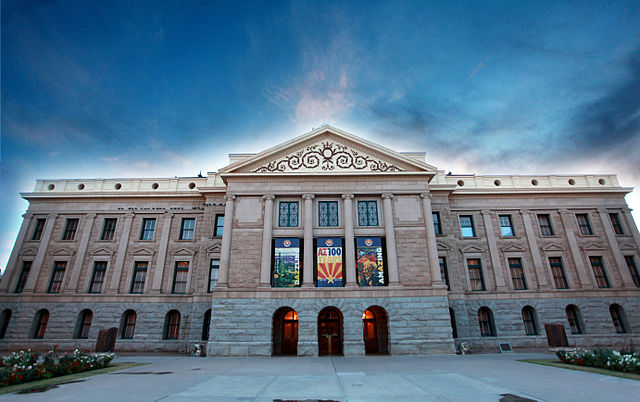

A moment of silence on the Arizona Senate floor this week became the center of a political dispute that has drawn attention to how senators on both sides of the aisle choose to honor public figures.
Senator Jake Hoffman (R-AZ) was filmed leaving the chamber through the double doors as colleagues observed a moment of silence for Reverend Jesse Jackson, who passed this week following a long illness.
Jackson, who founded the Rainbow PUSH Coalition and ran for the Democratic presidential nomination in both 1984 and 1988, had been diagnosed with progressive supranuclear palsy, a neurological condition. He was widely recognized as a significant figure in American civil rights history.
Arizona Senate Democrats posted footage of Hoffman's exit on X, drawing a pointed contrast with what happened the following day, when Hoffman asked the chamber to pass two bills honoring conservative activist Charlie Kirk.
"While he asked for respect for his friend, he showed little for a pillar of the Civil Rights movement," the Senate Democrats wrote.
Hoffman and fellow Republicans did not publicly address the criticism directly. Instead, they moved forward with Senate Bill 1010 and Senate Bill 1439.
The first bill, sponsored by Senate President Warren Petersen (R-AZ), would designate Phoenix's Loop 202 as the Charlie Kirk Loop 202. The second, sponsored by Hoffman, would create a Charlie Kirk memorial specialty license plate, with proceeds directed toward Turning Point USA's student outreach programs.
Hoffman called the legislation a continuation of Kirk's mission. "His voice was not silenced—it was multiplied," he said.
This situation has prompted broader conversation about how public figures are memorialized and whether political differences shape those decisions.
What do these coinciding events say about how politics shapes the way we remember public figures?