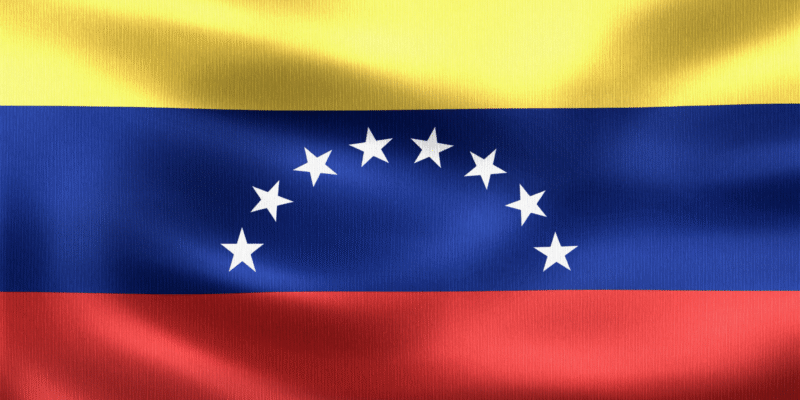

Venezuela’s interim President Delcy Rodriguez signed into law a reform of the nation’s hydrocarbons legislation, opening the country’s oil industry towards privatization and allowing for more foreign investment.
President Rodriguez enacted the reform bill less than a month after the capture of deposed Venezuelan Dictator Nicolas Maduro in a U.S. military operation in Venezuela’s capital, Caracas.
President Donald Trump has been working to persuade US oil companies to invest in Venezuela’s oil reserves, a difficult task due to the country's long history of mismanagement, under-investment, and a complex political climate.
Rodriguez signed the law less than two hours after Venezuela’s National Assembly approved it.
Subsequently, the US Treasury Department began to ease its sanctions on the nation’s oil, granting US companies further capabilities to operate in Venezuela.
Additionally, Rodriguez spoke with President Trump and Secretary of State Marco Rubio, who on Jan. 28 clarified to U.S. senators in a hearing how the Trump administration plans to control the sale of millions of barrels of Venezuelan crude and supervise the allocation of its revenue.
Secretary Rubio said that a fund has been set up in Qatar to avoid profits from being seized by American creditors and because of other legal complications that stem from the U.S. not considering Maduro’s government legitimate.
“It’s an account that belongs to Venezuela, but it has U.S. sanctions as a blocking mechanism,” Secretary Rubio added during the hearing. “We only control the dispersal of the money, we don’t control the actual money.”
“We’re talking about the future. We are talking about the country that we are going to give to our children,” said Rodriguez when speaking about the bill.
The reform would grant private investors with approved contracts the ability to manage oil fields, give companies in joint ventures with the Venezuelan oil company PDSVA greater sovereignty over projects, and provide them with more direct access to revenues generated from crude sales.
The new bill marks a pivotal shift from the 2006 hydrocarbons law signed by former president Hugo Chavez, which enforced state control over the oil industry.